
Leading automakers Maruti Suzuki, Hyundai and Tata Motors on Thursday reported robust sales in March as a shift towards personal mobility and pent up demand continued to help companies push dispatches to their respective retail partners. Toyota Kirloskar Motor, Honda Cars and Mahindra and Mahindra (M&M) also reported strong sales last month as compared to the year-ago period, when dispatches were adversely impacted due to the impending transition to BSVI from April 2020 and the nationwide lockdown to contain the coronavirus pandemic. The country's largest carmaker Maruti Suzuki India said its domestic sales stood at 1,49,518 units last month. The auto major had reported sales of 76,976 units in March 2020.

The list clearly shows the dominance of Maruti and Hyundai in the Indian passenger vehicle market.

New participants included Chinese players such as Great Wall Motors and Haima Automobile along with Olectra.

Sun Pharma was the top gainer after SPARC received Sebi nod to raise up to Rs.250 crore through a rights issue

First-time buyers of cars and sport utility vehicles (SUVs) have made a comeback, shows last year's data from top passenger vehicle (PV) makers. If the trend persists, it may move the needle on the overall car penetration ratio. India's car penetration ratio is 32 per 1,000 people - one of the lowest, compared to mature car markets like the US and Europe.

Market leader Maruti Suzuki India's passenger vehicles sales declined by 2.34 per cent last month at 133,702 units. Hero MotoCorp reported total two-wheeler sales of 480,196 units last month, down 20.05 per cent.

So far, the current year has not been great for the leading car exporters from India. In the top five list of exporters -- Hyundai, Ford, Maruti Suzuki, General Motors and Volkswagen -- it is only Hyundai which is clocking a growth.
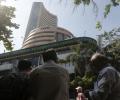
Tata Motors was the top gainer in the Sensex pack rallying 5.32 per cent. Among other prominent gainers were Bharti Airtel, IndusInd Bank, Sun Pharma, Axis Bank, Maruti Suzuki, Bajaj Auto and TCS.

Auto firms are likely to perform better in coming months.

S-Cross has seen a 22 per cent drop in dispatches in September.

Amid a slowdown in car sales, Maruti Suzuki India on Saturday said it will foray into the light commercial vehicles segment, 30 years after an initial plan was shelved when the company started operations.

Maruti Suzuki, Hyundai, Mahindra and Toyota reported low single-digit sales growth for the month owing to weak market sentiment

Maruti's compact segment comprising New WagonR, Swift, Celerio, Ignis, Baleno, Dzire, and utility vehicles, including Gypsy, Ertiga, XL6, S-Cross and Vitara Brezza saw robust sales, while the mini segment comprising Alto, S-Presso and Old WagonR saw negative growth.

Hemant Shivsaran lists the number of projects the Modi government has announced since August to woo Gujarat voters.

Morgan Stanley Sales & Trading, US, believes the stock is better value for money than others and has a upside as high as 73 per cent. A slowdown in the economy has hit demand and led to a fall in overall consumption in an auto market which till recently was one of the fastest growing in the world.

Maruti Suzuki, riding on the success of models like Swift, Estillo and Dzire, posted a growth of 3.4 per cent over the same period in the previous fiscal.

Cumulative sales of India's top passenger vehicle makers -- Maruti Suzuki, Mahindra and Mahindra, Tata Motors, Honda Cars, and Toyota Kirloskar -- increased to 206,418 units in February over 200,322 units in the same month last year, an increase of 3 per cent.

The GSX-R1000 is now on offer in an all-new, even more lethal avatar, laced with an ultra-modern electronics suite. Arun Mohan Nadar got first taste of the bike at the Kari Motor Speedway in Coimbatore.

The auto industry has had a mixed month. The build up to Dhanteras and Diwali was good but the demand tapered off subsequently.

India has a history of jugaad, and retrofitting vehicles is one such manifestation of the legendary Indian skill. Not so long ago autorickshaws and small Marutis used to strap on subsidised LPG cylinders and power themselves to a cheap ride. There were the odd explosions, lives were lost, but the jugaad continued. Then compressed natural gas (CNG) was introduced in Delhi following a court order. Initially, customised CNG kits were fitted to conventional (internal combustion engine or ICE) autos cheaply, enabling commuting at less than half of what you would cough up for diesel. The industry is better organised now with Suzuki and Hyundai designing CNG-fired vehicles, and Mahindra and TVS manufacturing liquefied petroleum gas (LPG)-powered three wheelers.

After a turnaround in performance by Indian equity markets since July that has seen the S&P BSE Sensex and the Nifty50 wipe out the year-to-date losses, analysts suggest investors start nibbling into stocks that are focused on the domestic economy. While they say intermittent corrections, led by policies of global central banks and other economic data, cannot be ruled out, analysts expect India's relative outperformance among global equity markets to continue as it looks better placed with a healthy economic recovery, and remains one of the fastest growing major economies. In this backdrop, Neeraj Chadawar, head of quantitative equity strategy at Axis Securities, believes that amid global slowdown, aggressive tightening by the central banks, and preference for domestic interests first (by the local government), export-oriented themes are likely to be muted or will deliver conservative returns in the near-term.

The growth momentum that started during the festival season is likely to sustain in the new year, reports Arindam Majumder.

It may be the season for corporate matchmaking but India Inc's record of managing partnerships is far from impressive, says Shailesh Dobhal.

Maruti Suzuki, Hyundai, Honda Cars and Tata Motors posted single digit growth during the period under review while M&M reported decline in sales.

The number of participating automakers has fallen from 50 in 2018 to 30 this year. The count of exhibitors, including technology companies, has come down from 119 to 112. And showstopper luxury and supercar brands, including Toyota, Jeep, Lamborghini, Porsche, and Volvo will be missing. Similarly, the commercial vehicle makers also gave the show a miss -- a prolonged economic slowdown has dented their fortunes and near chances of any recovery.

The challenges of transition to stricter emission norm BS-VI from BS-IV and compliance to new safety norms thereby making vehicles costlier are lurking around the sector.

Ahead of the peak festive season, India's passenger vehicle makers are staring at a cumulative order backlog of nearly 500,000 units as chip shortage continues to cripple production. The crisis is forcing companies to change their production plans frequently and take a call on the variants they can manufacture based on the availability of semiconductors. The booking numbers are not a true reflection of demand, said manufacturers.

Maruti Suzuki Celerio will now come equipped with ABS and airbags for all its variants.

BS-VI emission norms and the COVID-19 lockdown impacted the dispatches.

Other players who have declared no production days in the recent past, and during this month, include Mahindra & Mahindra, Maruti Suzuki, Hero MotoCorp, Bosch, Jamna Auto, Wabco and Sundaram-Clayton.

Car maker Maruti Suzuki India Ltd on Monday reported a 15.75 per cent jump in the total sales in May at 79,872 units as against 69,001 units in the same month last year.
Maruti Suzuki India and Tata Motors reported decline in sales during June this year.

The electric vehicle evolution in India's passenger vehicle market has remained frozen in time and may see limited adoption over the next decade, experts say.

Maruti has announced it will phase out diesel variants from April 1, 2020, when stringent BS VI norms take effect

Japanese auto major Nissan on Wednesday said it is discontinuing Datsun brand in India, nine years after the company kicked off the marque's global relaunch in the country. Having failed in its ambitious global relaunch of Datsun, Nissan had in 2020 discontinued the brand in Russia and Indonesia, the other two countries along with South Africa and India which were marked as key markets targeting the entry level car segment. Confirming the move to discontinue the Datsun brand, Nissan India in a statement said, "Production of Datsun redi-GO has ceased at the Chennai plant (Renault Nissan Automotive India Private Ltd). "Sales of the model still continue (till the stock lasts)."

Market leader Maruti Suzuki is putting finishing touches to its plan of finding its feet in what is being hailed as a battle of epic proportions in India's fastest-growing passenger vehicle segment, reports Arindam Majumder.
The new financial year started on a mixed note for car makers.
Cyrus Mistry in his second appearance as chairman of Tata Motors tried to reassure shareholders that steps were being taken to regain market share in both cars and trucks.

Maruti Suzuki is offering cash discounts ranging from Rs 5,000 on its hatchback Celerio to Rs 35,000 on entry level Alto800.

Passenger vehicle wholesales in India increased by 12.73 per cent to 285,367 units in November as against 253,139 units in the same month last year riding on the back of festive demand, auto industry body SIAM said on Friday. According to the latest data by the Society of Indian Automobile Manufacturers (SIAM), two-wheeler sales rose 13.43 per cent to 16,00,379 units, compared with 14,10,939 units in the same month last year.
